The short answer: WS2815 looks cleaner on paper and on the PCB, but GS8208 is often better for real installations.
Both GS8208 and WS2815 are 12V, 5050 RGB, one-IC-per-LED, SPI/NeoPixel-style chips with dual-signal backup. That means one dead pixel does not kill the whole strip.
The big difference is inside the package.
WS2815 integrates resistors and capacitors inside the 5050 LED. The PCB looks neat, assembly is simpler, and sourcing is easy. But integrating more passive components inside the LED increases the chance of manufacturing defects and makes the pixel more sensitive to interference. In real-world tests, WS2815 strips can flicker when placed near phones or strong EMI sources.
GS8208 keeps the resistor/capacitor external on the PCB. The board looks busier, but the LED itself is simpler and often more robust. GS8208 uses a constant-current architecture, has stronger EMI resistance, and performs better near mobile phones or noisy power environments.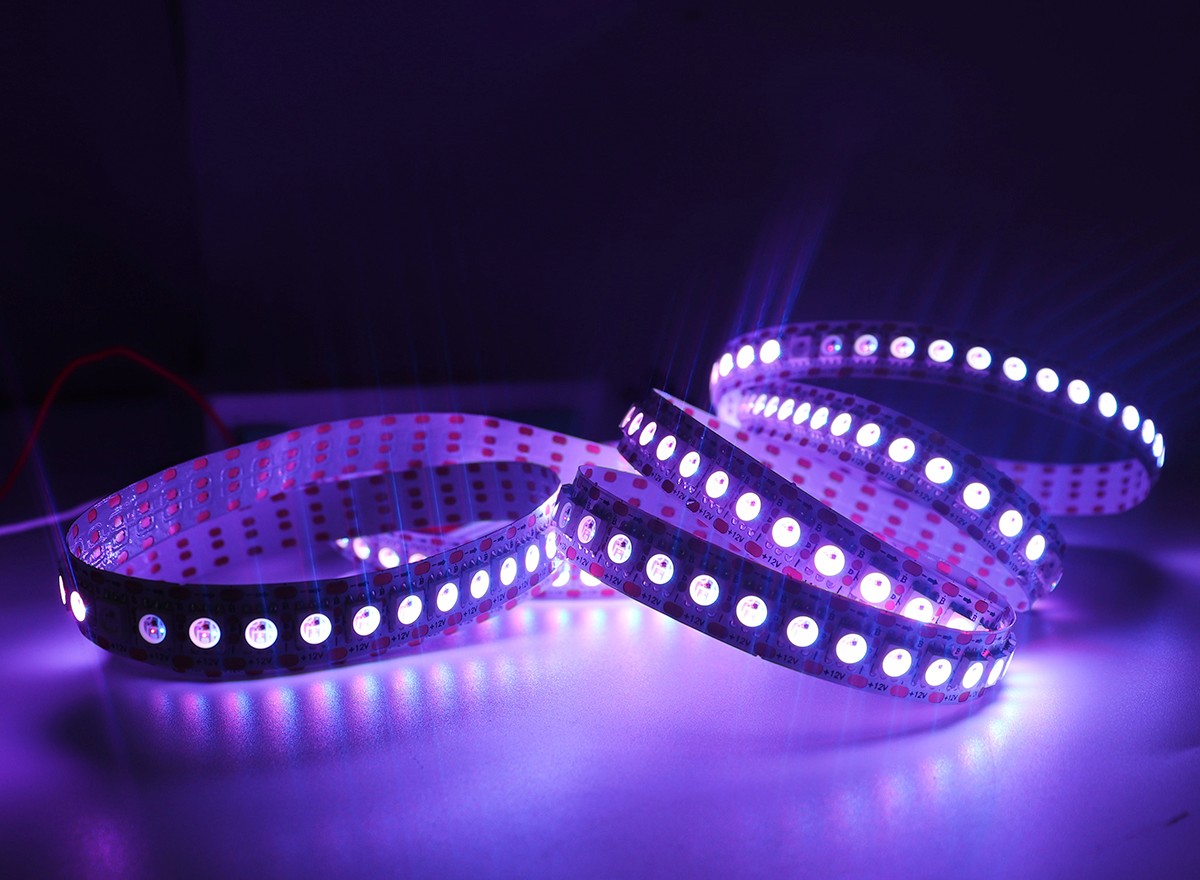
For video and stage use, GS8208 is also better.
WS2815 typically runs around 2 kHz PWM, while GS8208 runs around 8 kHz PWM. That means GS8208 flickers less on camera, handles slow fades better, and supports smoother low-brightness color mixing. GS8208 also has better gamma handling, so dim gradients look more natural instead of stepping abruptly.
Another practical point: GS8208 is very WS2815/WS2812-compatible at the protocol level. Most SPI controllers, Arduino, ESP32, Raspberry Pi, K-1000C, T-1000S, LEDedit and Madrix-style systems can drive it without drama. You get 12V installation convenience with better filming performance.
WS2815 is not bad. If you want the cleanest PCB, easiest sourcing, and a proven 12V chip, WS2815 is fine.
But if your project involves:
stage and broadcast lighting
architecture and signage
long commercial runs
camera shooting
noisy electrical environments
high-density 144 LEDs/m strips
…then GS8208 is the smarter choice.
At the end of the day:
WS2815 is popular. GS8208 is engineered for performance.
That is why we build our 12V 144 LEDs/m, 12mm 5050 RGB, single-pixel-control strips with GS8208.
